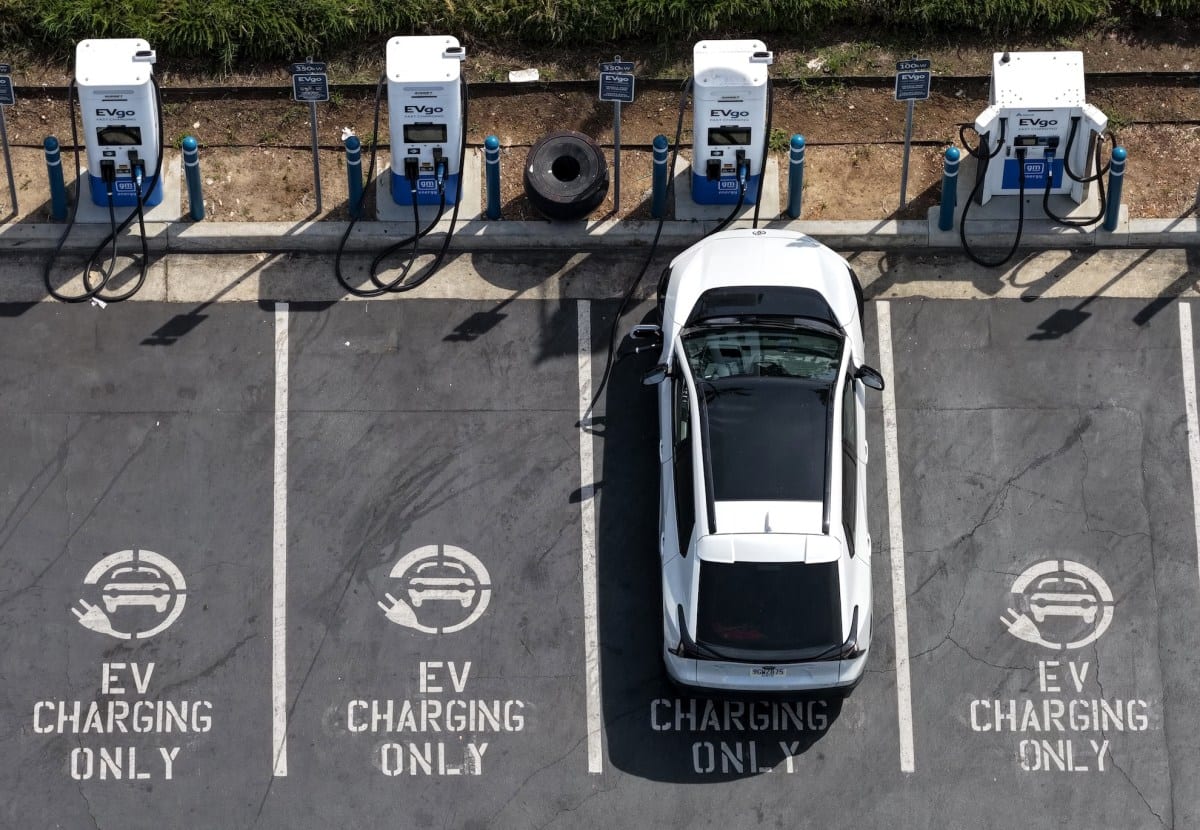
The U.S. electric vehicle market is proving more resilient than expected, with new data from Cox Automotive showing three straight quarters of sales growth following a sharp downturn tied to the expiration of federal tax credits last year.
According to the report, EVs accounted for 6.1% of total U.S. vehicle sales, the strongest showing since the third quarter of 2025. Stephanie Valdez Streaty, director of industry insights at Cox Automotive, said in an analysis accompanying the report that the EV market is "finding its footing again." She attributed the recovery to more competitive pricing on electric models as well as renewed consumer interest spurred by rising gas prices.

Toyota, Rivian, and Subaru emerged as the biggest winners in the latest quarter. Toyota in particular saw strong gains, with sales of the Toyota bZ and Lexus RZ roughly doubling after both vehicles received a refresh that reached dealerships late last year. The updated models switched to Tesla-style charging ports and came equipped with larger batteries, more powerful motors, and quicker charging capabilities.
Tesla, by contrast, continued to struggle, with sales falling 20% year-over-year. Still, the company's early dominance of the EV market kept it well ahead of rivals — Tesla accounted for more than half of all EV sales in the third quarter.
The trajectory of the U.S. market echoes what happened in Germany after its government abruptly ended EV purchase incentives in November 2023, a year earlier than originally planned. German EV sales collapsed by more than half the following month. But the market didn't stay down for long. It steadily clawed back share, and by August — the most recent month with available data — German EV sales were the second-highest ever recorded.

The parallel suggests that the loss of government incentives, while painful in the short term, doesn't necessarily spell long-term doom for electric vehicle adoption. Instead, automakers appear to be adjusting by improving their products and sharpening prices to keep consumers interested even without subsidies softening the cost.
For now, the U.S. EV market appears to be stabilizing rather than shrinking further, with manufacturers like Toyota demonstrating that meaningful upgrades to range, charging speed, and compatibility can reignite buyer enthusiasm. Whether the momentum continues will likely hinge on fuel prices, further product refreshes, and how quickly other automakers follow Toyota's lead in closing the gap with Tesla's early advantage.
Source: TechCrunch
Still catching up? Start with Study: Electric vehicle boom has saved oil-importing countries $20bn since start of Iran war
 FerrariPorscheLamborghiniAudiJLRMercedesEVAston MartinBMWMclarenPrivacy PolicyTerms And Conditions