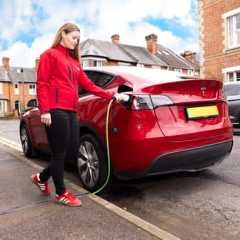
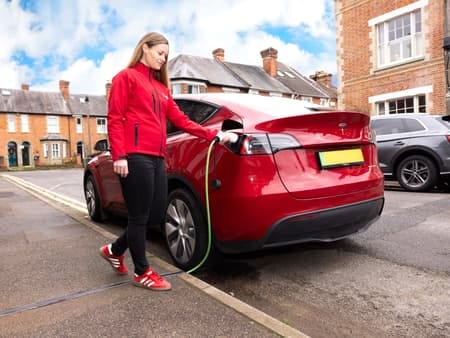
The RAC has called on the Government to do more to tackle what it describes as a “driveway divide”, after figures showed just 31 households received a chargepoint grant designed to help drivers without off-street parking switch to electric vehicles.
The £500 grant, available until March 2027, is meant to offset the cost of buying and installing a home chargepoint for drivers who also fit a cross-pavement cable channel, commonly known as an EV gully, which safely runs a charging cable from a house to the kerb. A chargepoint typically costs around £1,000, with the gully itself adding roughly £1,300. Some councils also charge licence fees of up to £185 a year, while others refuse to allow gullies altogether.
Last week, the Government scrapped the requirement for planning permission to install an EV gully, though council authorisation is still needed, and the rule change does not apply to homes in England’s conservation areas. Councils will still need to check that gullies do not interfere with underground gas, water, electricity or telecoms infrastructure.
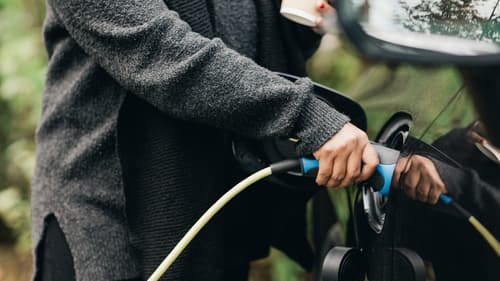

Despite this, the RAC says uptake remains far too low given that around 9 million UK households have no access to off-street parking. The organisation argues the low number of grants handed out shows cost and red tape are still deterring people from installing home charging equipment.
Home charging is significantly cheaper than public charging, which carries 20% VAT, compared with the temporary removal of VAT on household electricity announced in October to ease living costs. RAC research found 22% of people are put off going electric specifically because they lack a driveway, while 43% cite long waits at public chargers and 29% point to high charging costs.

Interest in EVs has grown following fuel price rises linked to the US/Iran conflict, with battery-electric cars making up 28% of new UK registrations in September, according to the Society of Motor Manufacturers and Traders, up 36% year-on-year. Separate RAC research found 44% of petrol and diesel drivers would seriously consider switching if fuel exceeded £2 a litre — a threshold diesel has now passed.
A £25 million government fund already exists to help councils support EV gully installations, but adoption varies widely, with Lambeth and Calderdale among authorities banning them outright.
RAC head of policy Simon Williams said demand to go electric is strong, but “the infrastructure for home charging just isn’t there yet” for those without driveways. He urged ministers to cut VAT on public charging from 20% to 5% to narrow the cost gap, calling the current situation a missed opportunity to accelerate the shift to electric vehicles.
Source: RAC
Catch up on our earlier post: Over 40% of Rapid EV Charging Networks Fail to Hit Mandatory Reliability Target