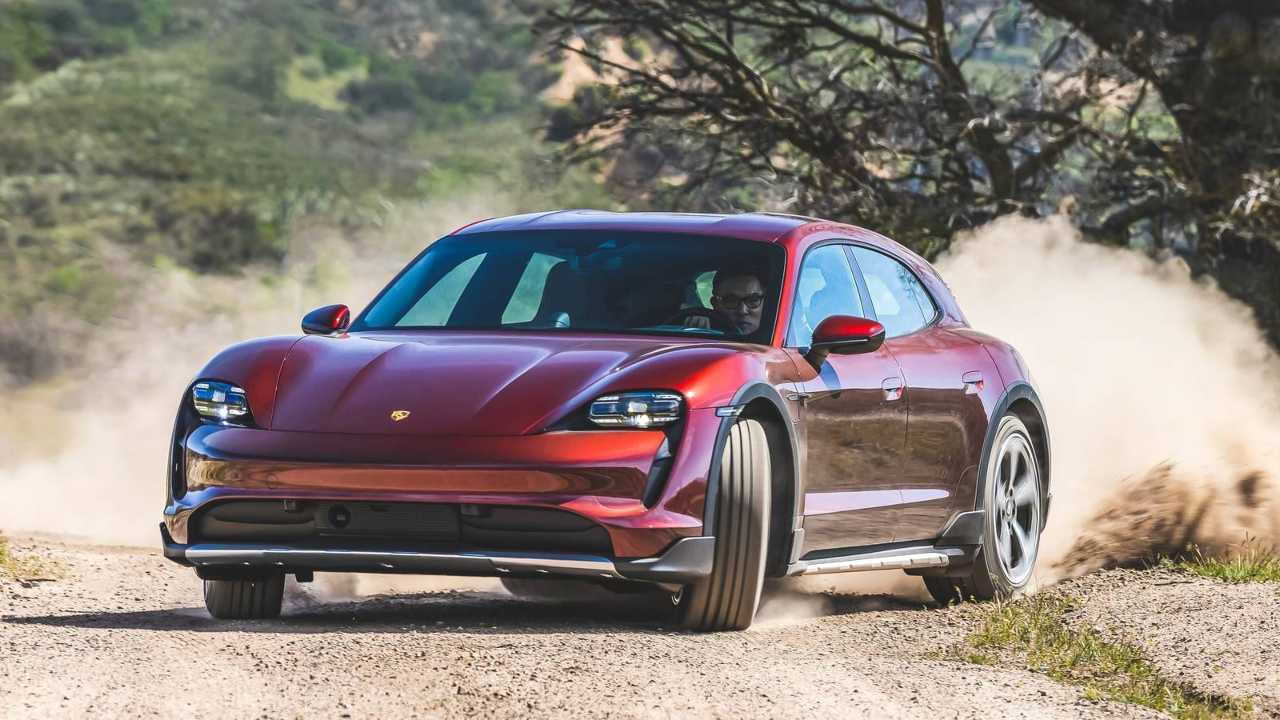
Porsche has filed a patent that reimagines the classic handbrake turn for a world without a mechanical brake lever, using electric motors and paddle controls to get its EVs sliding sideways.
The handbrake or e-brake turn is a time-honored move for getting a car's rear end to kick out, favored by rally drivers and teenagers alike. Locking the rear tires with a quick yank of the handbrake lets the back of the car rotate around, setting up a slide. But the move has become harder to pull off in modern vehicles because electric parking brakes tend to be simple on-off switches rather than the finely adjustable levers of old. CarBuzz uncovered a Porsche patent that solves this problem for electric models like the Taycan and Cayenne Electric by skipping the brake altogether.
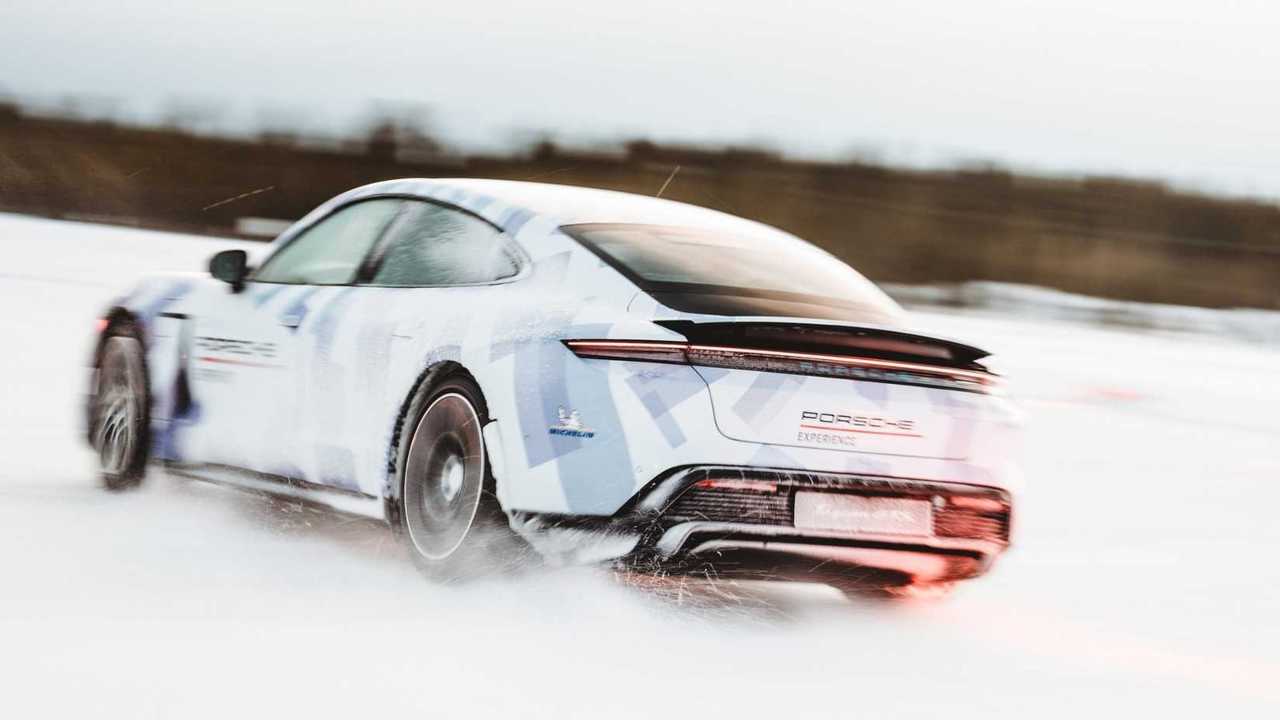

Instead of mechanical braking, Porsche's engineers turned to the electric motors themselves. The patent documentation states plainly that "braking torque at the rear wheels can be applied by the electric motor," meaning the car's regenerative braking system could stand in for a handbrake. Regenerative braking offers an added benefit over a traditional handbrake: it can push a tire just past the edge of grip and then modulate quickly, allowing for a more controlled, adjustable slide rather than an abrupt lockup.
To activate this electronic slide-inducing function, Porsche is looking at paddles mounted behind the steering wheel. Rather than triggering fake gear shifts, pulling the paddles would instead apply braking force to the rear wheels. The system might calculate braking force automatically, or use longer-travel paddles that behave more like the trigger buttons on a game controller. The real innovation lies in tying this into Porsche's torque vectoring system. On a single rear-motor setup, the torque vectoring differential could brake one rear tire while leaving the other free, with the driver choosing the side through the paddles. Cars with twin rear motors could apply varying brake force to each wheel independently, offering drivers a deep well of control, even if it adds complexity mid-drive.

Paddles aren't Porsche's only idea — the patent also floats footrest-mounted pedals similar to old-school high-beam switches, or a console-mounted device styled after a traditional handbrake. Since everything would be electronically controlled, the possible designs are wide open.
The push behind this innovation reflects a broader challenge for Porsche and other automakers: convincing gas-car loyalists to embrace EVs. Alongside simulated manual gearboxes and artificial engine sounds, this electronic handbrake substitute is another attempt to preserve the playful, mechanical feel that enthusiasts associate with traditional sports cars. It may not lure diehard 911 GT3 RS fans away from their favorite exhaust note, but it could make a future Taycan considerably more entertaining. As with all patents, there's no guarantee this technology will reach production.
Source: CarBuzz
Still catching up? Start with The Porsche 911 GT3 Is Even Better As A Convertible: Review