
Lamborghini says raw speed is no longer enough to define a modern supercar, arguing that emotion and drivability are now just as important as outright pace. The Italian marque's stance comes as electric family sedans and SUVs increasingly match the acceleration once reserved for exotic machinery, pushing Lamborghini to focus on making fast driving both more accessible and more thrilling.
Speaking to CarExpert in Milan, Lamborghini model line director Paolo Racchetti pointed to the new Temerario as proof of this shift. "Speed is still an important part of performance, but it's clear that it's necessary, not sufficient, for a car to be called a super-sports car," he said, adding that dynamic capability is becoming more important while outright performance figures may matter less in future.
According to Racchetti, a genuine super-sports car must deliver emotion alongside acceleration – something he says drove Lamborghini toward hybrid architecture rather than away from it. He noted the Temerario retains a turbocharged combustion engine capable of spinning to 10,000rpm, preserving the mechanical drama he believes only an engine can provide, while hybridisation adds performance, drivability and further emotional depth.
The Temerario, which succeeds the Huracán as Lamborghini's entry-level model, pairs a 4.0-litre twin-turbo V8 with three electric motors for a combined 677kW output. Lamborghini claims a 0-100km/h sprint of 2.7 seconds, but highlights that the engine's ability to rev past 10,000rpm is a first for a mass-produced supercar. Its two front electric motors can independently vary torque to each wheel, letting the car actively shape cornering and yaw rather than simply adding straight-line thrust. This flexibility enables 13 drive configurations, including a three-stage Drift mode.
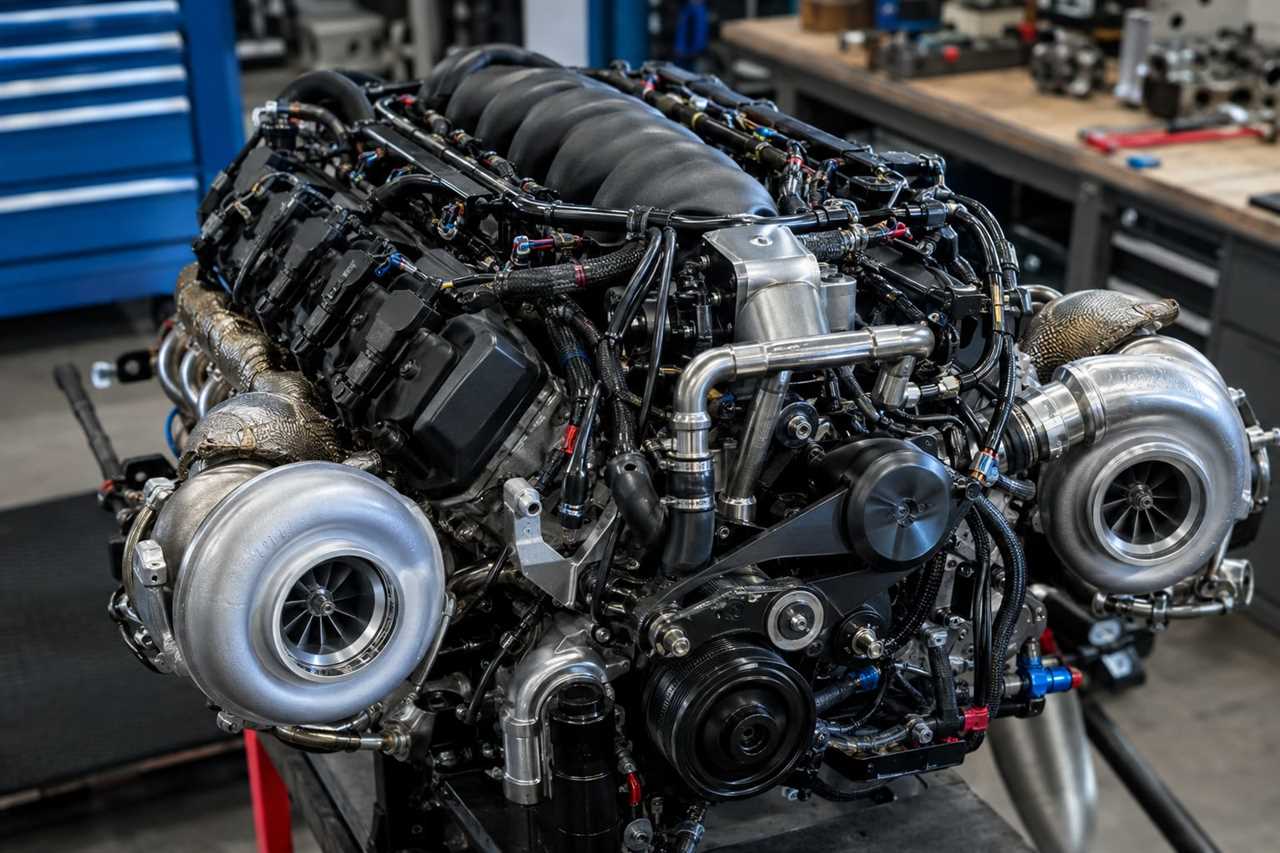
Racchetti credits much of this versatility to what Lamborghini calls LDVI 2.0, a central "brain" that coordinates the engine, gearbox, motor, damping and braking systems. He says this integration allows the Temerario to deliver serious performance while remaining approachable, giving drivers confidence as the electronics work seamlessly in the background to emphasise emotion over intimidation.
This same philosophy underpins Lamborghini's continued reluctance to build a fully electric model. Earlier this year, CEO Stephan Winkelmann told CarExpert the brand had indefinitely postponed its first EV, confirming its upcoming fourth model — a 2+2 GT based on the Lanzador concept — will instead use plug-in hybrid power. "We are not selling mobility – you don't buy a Lamborghini because you have to go from A to B every day," Winkelmann said.
Despite rivals closing the performance gap, Lamborghini has now posted five consecutive years of record sales, delivering 10,747 vehicles in 2025.
Source: CarExpert
See also our earlier piece: 2026 Lamborghini Temerario: A Track-Tested Successor to the Huracán
 FerrariPorscheLamborghiniAudiJLRMercedesEVAston MartinBMWMclarenPrivacy PolicyTerms And Conditions