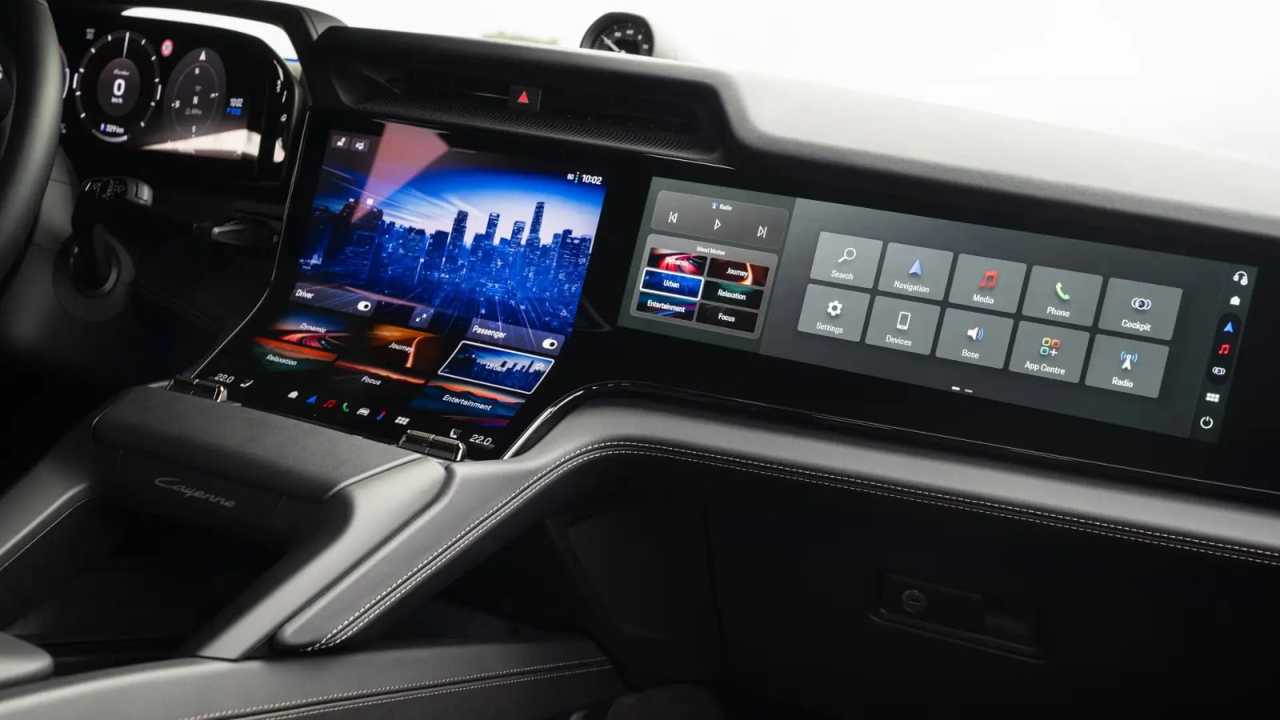
In-car touchscreens have earned plenty of criticism, much of it fair. The industry's rush to stuff every function behind glass panels and haptic buttons—a trend largely blamed on Tesla—has sparked backlash even from automakers themselves. Volkswagen's own CEO has publicly questioned the logic of touch-sensitive sliders, admitting he doesn't understand their appeal in certain uses.
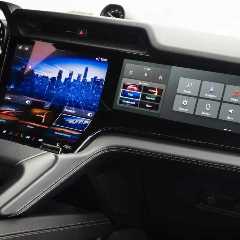
Given that climate, skepticism was the natural reaction to the Porsche Cayenne Electric's centerpiece: a massive touchscreen bent at a 45-degree angle in the middle of the dashboard. The idea of a simple fold making the whole experience more usable seemed like a stretch.
But after spending time with it, that skepticism doesn't hold up. The curved screen actually represents a smarter way to design an in-car touchscreen.
The core issue with the typical Tesla-style tablet isn't that it's touch-based—it's that the execution is poor. A flat slab of glass sitting at one fixed angle forces drivers into awkward reaches, bent elbows, and eyes off the road, all while glare makes the screen hard to read.
Porsche's bent design fixes much of that. The lower portion, closest to the driver, handles the functions used most often—climate, music, quick settings, and navigation input—placing them exactly where a hand naturally falls. A built-in wrist rest reinforces that ease of reach. Meanwhile, the upper section stays positioned for sightlines, continuing to display maps alongside the driver's cluster and head-up display.
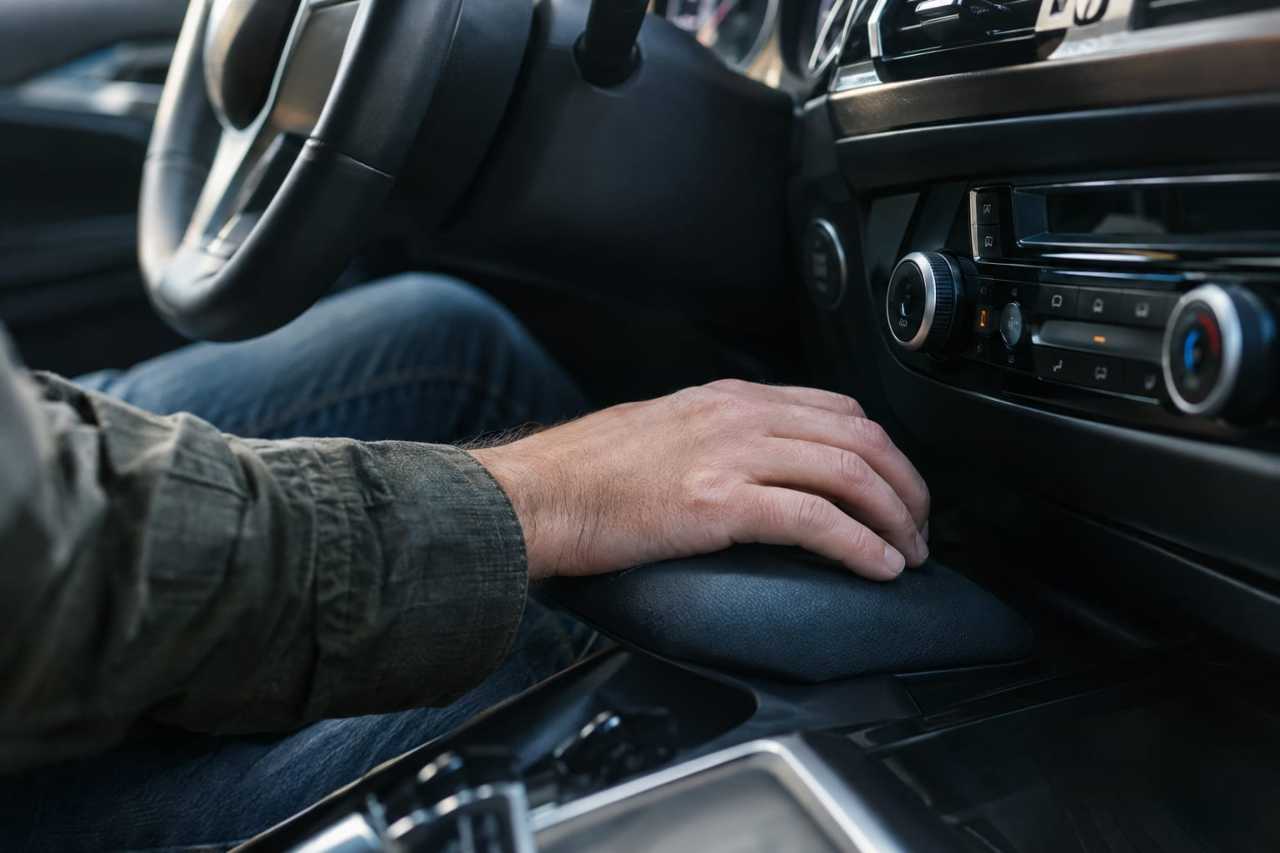
The software itself runs on Android with native Google Maps built in, and the layout feels intuitive. Porsche also added a sliding center console armrest, letting drivers scoot it forward or back for an even more comfortable reach to the screen.
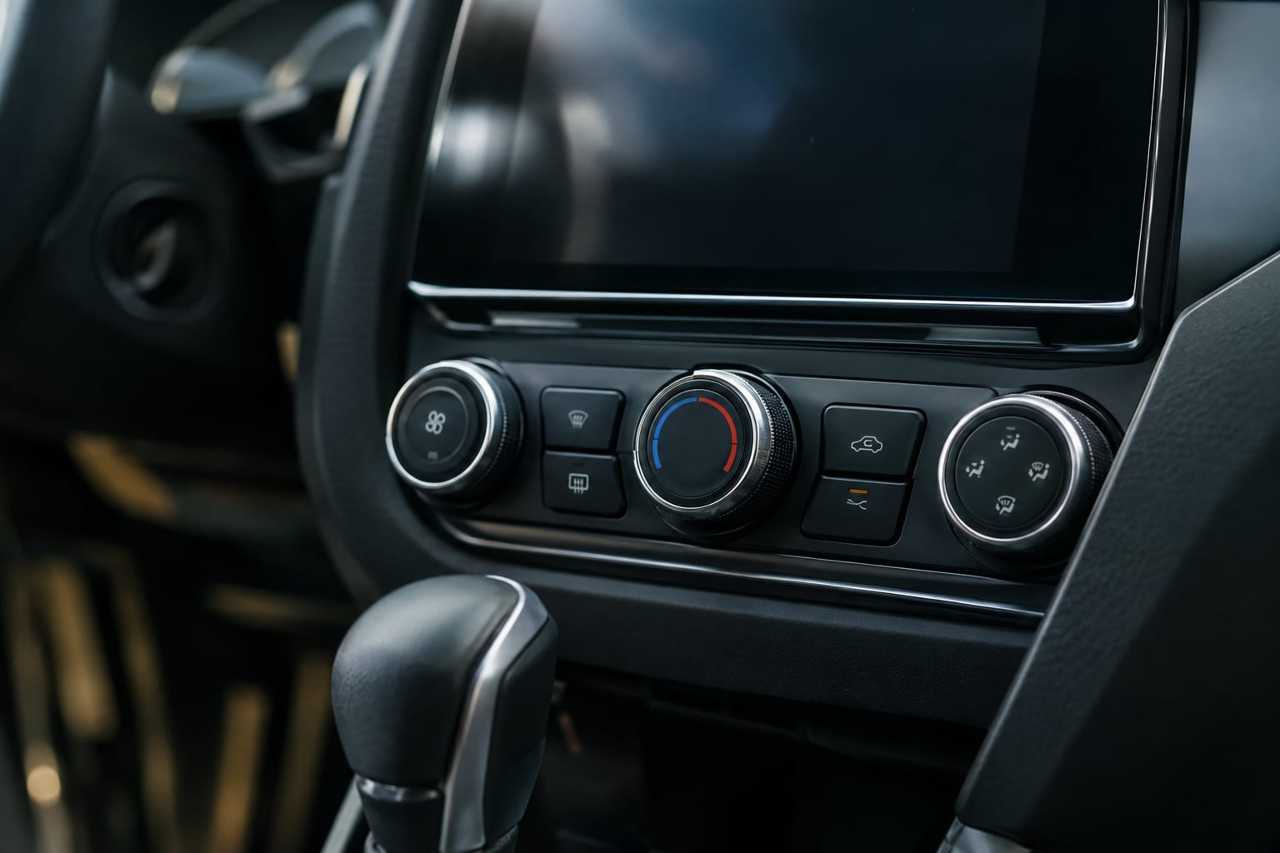
It isn't a flawless system. Functions like heated seats and the windshield defroster are still touch-capacitive rather than physical buttons, which feels like an unnecessary compromise. Still, considering how many features, drive modes, and settings Porsche packed into the Cayenne, some digitization was probably unavoidable. At least actual hardware survives for climate temperature and fan speed, along with a volume knob and buttons on the steering wheel.
This curved approach, along with BMW's sweeping pillar-to-pillar Panoramic Vision display, suggests automakers may finally be moving past the obsession with screen size for its own sake and toward genuine usability.
If this kind of thoughtful design signals the end of the oversized, bolted-on dashboard tablet era, that shift can't come soon enough.
Source: InsideEVs
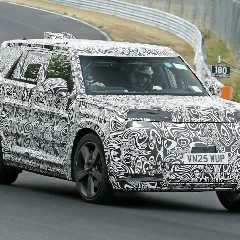
Still catching up? Start with New Porsche Petrol Mid-Size SUV Fast-Tracked to Support Macan EV, Maybe With a V8